PETERS FT
Peters, Frederic Thornton Died
Personal Information
| Rank | Captain |
| Forename(s) | Frederic Thornton |
| Surname | Peters |
| Gender | M |
| Age | 53 |
| Decorations | VC, DSO, DSC*, US DSC, MiD |
| Date of Death | 13-11-1942 |
| Next of Kin | Son of Frederick and Roberta "Bertha" Hamilton Susan Peters (née Gray), of Nelson, British Columbia, Canada. |
Aircraft Information
| Aircraft | Short Sunderland II |
| Serial Number | W6054 |
| Markings |
Memorial Information
| Burial/Memorial Country | United Kingdom |
| Burial/Memorial Place | Portsmouth Naval Memorial |
| Grave Reference | Panel 61, Column 3. |
IBCC Memorial Information
| Phase | 5 |
| Panel Number | Not yet erected on site |
Enlistment Information
| Service Number | - |
| Service | Royal Navy |
| Squadron | 10 RAAF |
| Squadron Motto | Strike First |
| Trade | Passenger |
| Country of Origin | Canada |
Miscellaneous Information
| HMS Excellent |
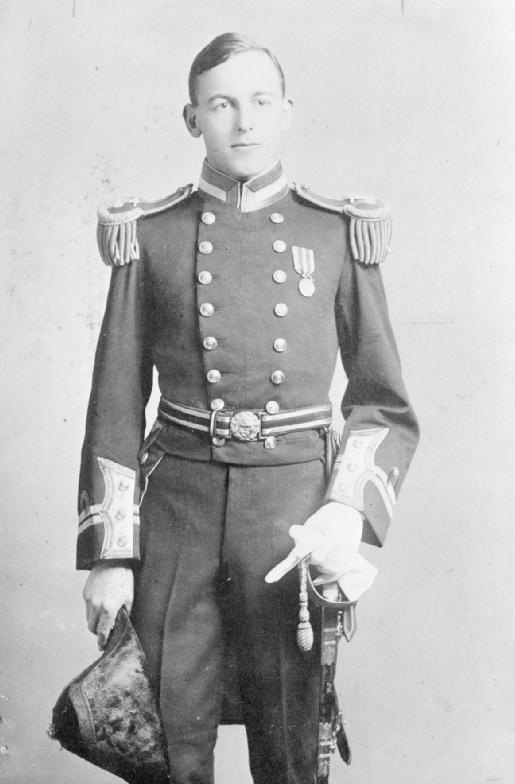
| Born 17 September 1889. Known as Fritz. His father was Premier of Prince Edward Island between 1891 and 1897. His mother was the daughter of John Hamilton Gray, who was Premier of Prince Edward Island at the time of the Charlottetown Conference of 1864. Frederic was educated at St. Peter's School on Prince Edward Island, at school in British Columbia and at Naval School in England. Two of Peters' brothers died in action on the Western Front during the First World War: John Francklyn Peters in April 1915 and Gerald Hamilton Peters in June 1916. Frederic also served in the First World War, during which time he was Mentioned in Despatches and awarded the DSO for his courageous efforts in saving lives after a German shell struck the engine room of HMS Meteor during the Battle of Dogger Bank. In 1918, he was further recognized with the Distinguished Service Cross (DSC) for demonstrating outstanding initiative, skill, and fearlessness during anti-submarine operations (précised from Wikipedia). |
| During the Interwar period, Peters worked mostly along the British Gold Coast manufacturing pumps to be used by midget submarines.[2] He split his time in the interwar years between Britain, Canada and the Gold Coast. |
| He took part in Operation Reservist, during which he won the Victora Cross. Operation Reservist was part of Operation Torch, the Allied landings in French North Africa. It was an attempt to capture Oran Harbour, Algeria and prevent it from being sabotaged by its French garrison. The two sloops HMS Walney and HMS Hartland were packed with British Commandos, soldiers of the 6th United States Armored Infantry Regiment and a small detachment of United States Marines. On 8 November 1942, Captain Peters, commanding in Walney, led his force through the boom towards the jetty in the face of point-blank fire from shore batteries, the sloop La Surprise, and the destroyer Épervier. Blinded in one eye, he alone of 11 officers and men on the bridge survived. Besides him, 13 ratings survived Walney sinking. The destroyer reached the jetty disabled and ablaze and went down with her colours flying. Captain Peters and a handful of men managed to reach the shore, where they were taken prisoner. Hartland came under fire from the Typhon and blew up with the loss of half her crew. The survivors, like those of Walney, were taken prisoner as they reached shore. Peters was also awarded the United States Army's Distinguished Service Cross for the same actions. The citation, issued in Allied Force Headquarters General Orders No. 19 23 November 1942, stated that: "Captain Peters distinguished himself by extraordinary heroism against an armed enemy during the attack on that post. He remained on the bridge in command of his ship in spite of the fact that the protective armor thereon had been blown away by enemy shell fire and was thereby exposed personally to the withering cross fire from shore defenses. He accomplished the berthing of his ship, then went to the forward deck and assisted by one officer secured the forward mooring lines. He then with utter disregard of his own personal safety went to the quarter-deck and assisted in securing the aft mooring lines so that the troops on board could disembark. At that time the engine room was in flames and very shortly thereafter exploded and the ship turned on its side and sank." The survivors were released on 10 November 1942 when the French garrison surrendered. In the meantime, the French systematically destroyed the harbour facilities at Oran: Operation Reservist was thus a complete failure (source: Wikipedia) |
| Mount Peters, near Nelson, British Columbia where his mother lived in her last years with the family of her daughter Helen Dewdney and her husband E.E.L. Dewdney, was named in his honour in 1946. |
Casualty Pack Number Find Out More
| AIR 81/19604 () |
The National Archives
| Record of Events (Operational Record Book) AIR 27/151/22 |
| Summary of Events (Operational Record Book) AIR 27/151/22 |
Fellow Servicemen
Please note that this list gives all the losses aboard the quoted aircraft and occasionally these may have occurred on an earlier date when the aircraft was not itself lost. Please check the dates of death carefully.
| Name | Outcome |
|---|---|
| Cordrey R E (Sgt) | Died |
| Vogel F W (Brigadier) | Died |
| Wadham G W (Captain) | Died |
| Devlin R R (Captain) | Died |
Last Operation Information
| Start Date | - |
| End Date | - |
| Takeoff Station | Mount Batten |
| Day/Night Raid | (25% moon) |
| Operation | Ferry flight from Gibraltar |
| Reason for Aircraft Loss | Crashed at the entrance to the Royal Navy's Devonport Dockyard, near Plymouth in thick fog. The pilot, Flight Lieutenant Wynton Thorpe, RAAF, held on to Frederic for ninety minutes in the water, but he was dead when the rescue launch reached them. |